24/7 Emergency Response · Arizona
Burst Copper Pipe, Polybutylene (PB2110) & Pressurized Supply Line Flood Cleanup in Arizona
When a pressurized copper pipe, gray polybutylene (PB2110) line, or braided fixture supply line bursts inside your Arizona home, our IICRC S500 emergency crews extract standing water, stabilize sagging ceilings, dry saturated wall cavities, and bill your HO-3 insurance directly. Call (480) 863-0799 24/7.
24-Hour Arizona Emergency Dispatch Line: Call (480) 863-0799 (On-Site FLIR Thermal Mapping • Zero Referral Fees • Direct Xactimate Insurance Billing)
24-hour emergency response · Serving all of Arizona
A Burst Supply Line Can Release Hundreds of Gallons Per Hour
When a pressurized pipe splits inside a wall or ceiling, water can spread through several rooms in minutes, soaking drywall, insulation, carpet pad, LVP subfloors, and cabinets. Call (480) 863-0799 right away so our extraction team can remove bulk water before particleboard swells and drywall gives way.
First-15-Minutes Homeowner Emergency Action Checklist
Before our certified restoration truck arrives at your property, follow these five steps to protect your safety, stop additional water damage, and preserve your homeowners insurance claim:
- Close the Main Water Shut-Off Valve: If a shut-off valve has broken off at the wall or a pipe is spraying inside drywall, turning the fixture handle will not help. Shut off the main house valve immediately.
- Open the Lowest Faucets to Drain Remaining Line Pressure: Once the main is closed, open an outdoor hose bib and a downstairs tub faucet so overhead lines drain and water stops pouring into your ceiling.
- Relieve a Bulging Ceiling Bubble Over a Bucket: If water is pooling inside a sagging painted ceiling, place a bucket underneath and carefully pierce the center of the bulge from the side to let it drain and reduce the risk of a sudden collapse.
- Switch Off Circuits Serving Wet Ceilings and Walls: Overhead leaks can fill recessed lights, ceiling fan boxes, and wall switches with water. Turn off those breakers at your panel.
- Leave Wet Drywall, Insulation, and Flooring in Place: Do not haul wet carpet or drywall to the curb before our crew photographs moisture readings. Your adjuster will want proof of how far the water spread.
The 4 Most Damaging Pressurized Pipe Failures in Arizona Homes
Arizona homes face four year-round plumbing failures: chlorine-degraded gray polybutylene (PB2110), mineral-pitted Type M copper, cracked plastic toilet supply nuts, and seized brass shut-off valves. Each one can flood a large part of a home quickly.
Pressurized supply-line floods are among the most costly water losses in Arizona because clean Category 1 water at high street pressure spreads fast across open floor plans. These are the four failures our crews see most often:
- Gray Polybutylene (PB2110) Splits (19781995 Homes): Installed in many homes across Mesa, Glendale, Peoria, Sun City West, Tucson, Green Valley, Prescott, and Bullhead City, gray polybutylene reacts with municipal chlorine and chloramines. The inside wall of the pipe becomes brittle over time and can split without warning inside walls, ceilings, or under slabs, especially at older crimp fittings.
- Type M Copper Pinhole Leaks & Elbow Erosion: Arizona's very hard water combined with fast-moving water in hot-water recirculation lines wears through thin Type M copper. A pinhole spray inside a stud wall can run unnoticed for days until water soaks the sill plate and spreads under hallway carpet and bedroom LVP.
- Plastic Toilet Supply Nuts & Braided Hose Blowouts: Many toilet supply lines use a plastic nut on the fill valve attached to a braided hose with a rubber core. When household pressure runs high (for example, when a pressure regulator fails), that plastic nut can crack and flood bathrooms, closets, and ceilings below while no one is home.
- Calcified Shut-Off Valves & Snapped Stub-Outs: Hard-water scale builds up around brass valve stems. When a homeowner forces a stuck under-sink or behind-toilet valve, the stem can snap or the copper stub-out can twist inside the wall, turning a small drip into an active flood.
| Plumbing Pipe / Fitting Type | Typical Arizona Home Age | Potential Discharge Rate | Primary Areas Damaged |
|---|---|---|---|
| Gray polybutylene (PB2110) main / manifold | 19781995 tract homes & townhomes | Hundreds of gallons per hour | Manifold walls, hallway ceilings, ground-floor carpet/LVP & cabinets |
| Type M copper pinhole or elbow split | 19702012 hard-water areas | Slow drip up to several hundred gallons per hour | Interior stud cavities, insulation, sill plates, adjacent bedrooms |
| Braided toilet supply line / plastic nut | All ages, high-pressure areas | Several hundred gallons per hour | Bathroom vanities, closets, bedroom carpet, ceilings below |
| Refrigerator ice maker / under-sink valve | All ages | Steady spray | Kitchen toe-kicks, hardwood/LVP flooring, pantry drywall |
| High-country winter freeze split | Flagstaff, Prescott, Payson, Show Low, Kingman | High flow once the pipe thaws | Exterior wall insulation, attic and ceiling drywall, crawlspace subfloor |
How We Extract & Dry Multi-Room Wall, Ceiling & Floor Floods After a Burst Pipe
Our burst pipe process combines truck-mounted water extraction, controlled ceiling cavity drainage, Injectidry wall and cabinet cavity drying, and LGR dehumidification to prevent secondary mold and warping.
When a lot of water floods an Arizona home, the first few hours often decide whether drywall, baseboards, and floors can be saved in place or need a full rebuild:
- High-Vacuum Water Extraction: Using truck-mounted vacuum extractors and weighted extraction tools, we remove most of the free water from carpet, pad, grout lines, and subfloor channels in the first hours on site.
- Ceiling & Soffit Cavity Stabilization: When an attic PEX line, upstairs bathroom pipe, or overhead copper line bursts, wet insulation becomes heavy and can pull down ceiling drywall. We open small relief ports, remove saturated insulation, and push warm, dry air across the ceiling joists and top plates.
- Wall & Baseboard Cavity Drying: Water from a burst pipe inside a wall travels along the slab edge into nearby rooms. We detach baseboards, drill hidden air-injection ports, and dry the bottom sill plates with Injectidry manifolds while LGR dehumidifiers and air movers bring wood moisture back to 6% to 10% MC.
| Affected Material | Caught Within 024 Hours (Category 1) | Wet 2448 Hours (Category 2) | Wet 48+ Hours (Category 3 / Mold Risk) |
|---|---|---|---|
| Residential carpet | Weighted extraction and in-place drying (usually salvageable) | Clean, treat with antimicrobial, dry after pad removal | Remove and replace under HEPA containment |
| Polyurethane / rebond carpet pad | Weighted extraction (salvageable if not delaminated) | Pad removal and subfloor sanitizing per IICRC S500 | Removal and disposal |
| 1/2" painted drywall | Detach baseboard, drill relief holes, inject dry air (save in place) | 12" to 24" flood cut if wicked high or insulation is soaked | 24"+ flood cut under negative-air containment |
| Wood kitchen / bath cabinets | Toe-kick cavity drying with Injectidry HP60 (save in place) | Remove toe-kick, sanitize slab beneath, dry frames | Remove swollen particleboard boxes; save solid wood doors and countertops where possible |
| LVP / laminate | Check moisture under planks; lift if water is trapped | Remove affected planks to dry the slab and prevent mold | Remove, sanitize slab and dry to below 4.0% CM |
Category 1 Clean Water vs. Category 2 Gray Water: The 48-Hour Clock
Under IICRC S500, water from a burst supply pipe starts as clean Category 1 water, but if it sits in carpet pad, drywall, or insulation for 24 to 48 hours in Arizona's warm indoor climate, it can degrade into Category 2 or Category 3 water.
That is why a fast response matters so much after a burst pipe:
- Hours 0 to 24 (Category 1): Water coming straight from a copper, PEX, or polybutylene supply line is clean. At this stage, carpet, baseboards, drywall, and cabinets can often be dried in place without tear-out, saving money and weeks of reconstruction.
- Hours 24 to 48 (Category 2): As clean water sits in drywall, carpet backing, and warm wall cavities, bacteria begin to multiply. Under IICRC S500, Category 2 saturation calls for carpet pad removal and EPA-registered antimicrobial treatment.
- After 48 to 72 Hours (Category 3 Risk): Standing water inside closed walls or under LVP beyond about 48 hours can lead to active mold growth, which may require HEPA containment and drywall flood cuts.
| Burst Pipe Flood Scenario | IICRC S500 Mitigation Scope | 2026 Arizona Rough Ballpark Range* | Typical HO-3 Coverage |
|---|---|---|---|
| Broken toilet / sink supply line (bathroom + hall) | Extraction, vanity toe-kick drying, 4 air movers + 1 LGR (3 days) | $1,350 $2,950 | Often covered above the deductible under Coverage A |
| Copper pinhole leak inside a wall (23 rooms) | FLIR wall scan, baseboard relief, wall cavity drying, floor extraction (34 days) | $2,200 $4,800 | Extraction, wall access and drying often covered |
| Polybutylene manifold rupture (multi-room) | Whole-floor extraction, LVP/pad removal, cabinet drying, 2 LGR units + HEPA (45 days) | $3,900 $8,600 | Sudden rupture damage often covered under standard HO-3 policies |
| Upstairs pipe burst with ceiling collapse | Ceiling takedown, wet insulation removal, multi-level drying (46 days) | $4,800 $12,400+ | Often covered under Coverage A (Dwelling) and Coverage C (Contents) |
Does Arizona Homeowners Insurance Cover Polybutylene & Copper Pipe Bursts?
Many Arizona HO-3 policies cover sudden and accidental water damage from a burst copper pipe, split polybutylene line, or broken supply hose, especially when the damage is documented right away with moisture readings.
Homeowners in older Arizona neighborhoods often worry a claim will be denied because the plumbing is old. Here is how documentation helps:
- Sudden Rupture vs. Long-Term Seepage: Unless your policy has a specific polybutylene exclusion, many standard HO-3 policies cover resulting water damage (extraction, drying, drywall, flooring, cabinets) from a sudden pipe split, whether the pipe is copper, PEX, CPVC, or polybutylene. Always check your own policy.
- Saving the Failed Fitting for the Adjuster: Adjusters often ask to see the burst section of pipe, crimp ring, or cracked supply nut. Our crew photographs the failed part in place and bags it so your adjuster has clear physical evidence.
Related Arizona Slab Leak & Structural Drying Resources

Under-Slab Leak Water Damage Cleanup & Floor Tear-Out
Arizona slab leak detection and cleanup
IICRC S500 Structural Drying & LGR Dehumidification
structural drying and dehumidification Arizona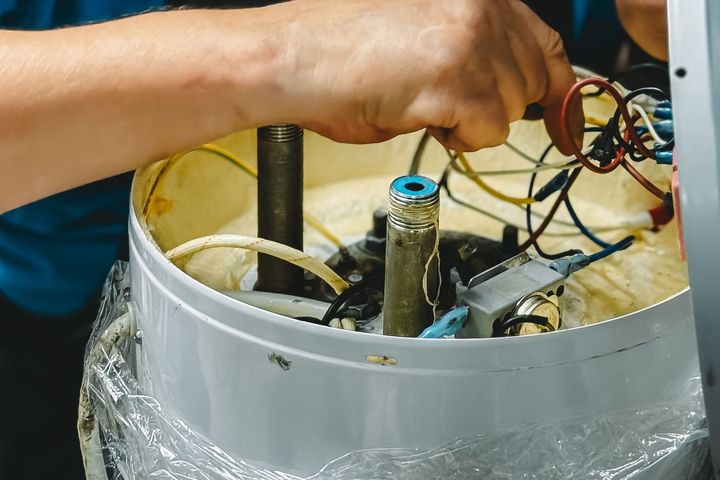
Burst Water Heater Tank & Garage Flood Extraction
water heater flood extraction Arizona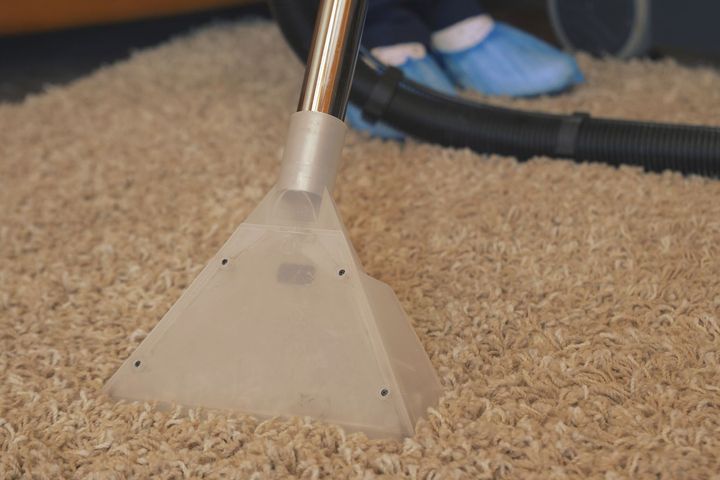
Wet Carpet, Delaminated Pad & Concrete Slab Extraction
wet carpet and pad extraction Arizona
Arizona Slab Leak & Burst Pipe Insurance Claim Guide
slab leak cleanup cost guide ArizonaFrequently Asked Questions
What should I do if a toilet or sink shut-off valve breaks off at the wall and water is spraying?
Go straight to your main water shut-off valve (usually on the front exterior wall near the hose bib or inside the garage) and turn it clockwise to shut off water to the whole house. Then call (480) 863-0799 for emergency water extraction.
Does Arizona homeowners insurance cover water damage from gray polybutylene (PB2110) pipes?
Under many standard Arizona HO-3 policies, sudden and accidental water damage from a burst polybutylene pipe is covered for extraction, drying, and floor and wall restoration, while the cost to repipe the plumbing itself is usually excluded. Check your own policy for any polybutylene exclusion.
Why should I keep the broken piece of pipe or hose after the plumber fixes it?
Adjusters often ask to inspect the failed part, such as a split copper elbow or cracked toilet supply nut, to confirm the flood came from a sudden rupture rather than slow neglect. Photograph and keep the broken part.
Can wet drywall and insulation be dried after a pipe bursts inside a wall?
If the water was clean Category 1 supply water and drying starts within about 24 hours, uninsulated interior drywall can usually be dried in place using hidden baseboard relief holes and Injectidry wall cavity drying. Soaked exterior wall insulation or walls wet longer than 48 hours usually need flood cuts.
How fast can mold grow inside an Arizona wall after a burst pipe?
In Arizona's warm indoor climate, especially in walls next to garages or exterior stucco, mold can begin growing on damp drywall paper and wood within 24 to 48 hours unless commercial dehumidifiers bring the cavity humidity down.